A 20 yard dumpster typically covers 3 to 4 tons of debris before overage fees kick in, and a 30 yard box usually tops out between 4 and 6 tons depending on what you're loading. Concrete and shingles hit that ceiling fast. Wood and household junk take longer. Des Plaines Porta Pros sets the tonnage upfront so you know the number before the truck shows up, and if you're weighing dumpster costs against a roll-off dumpster rental more broadly, the same principle holds across sizes.
Most 20 yard containers are rated for 3 to 4 tons of mixed debris, though the empty weight of the box itself runs heavier than people expect, since steel roll-offs are built to survive a forklift and a chain. That empty weight matters because haulers subtract it before billing you for what you actually threw away, a detail worth comparing against the porta potty rental cost breakdown if you're budgeting a combined site services quote. If you're clearing out a garage or doing a kitchen gut job, a 20 yarder from our 10 yard dumpster rental and 20 yard dumpster rental lineup handles most residential loads without brushing the limit. Heavier material changes the math fast. A load of wet drywall or tile weighs far more per cubic foot than bagged trash, so volume fills up while tonnage still has room, or the reverse happens and you hit the weight cap with half the box still empty, similar to how a temporary fence rental job needs its own separate load-bearing math for gates and panels. Check our dumpster sizes and dimensions page before you book if you're not sure which size fits the project. For Des Plaines renovation jobs, pairing the dumpster with a home renovation porta potty keeps the crew from tracking mud through a house that's already torn apart.
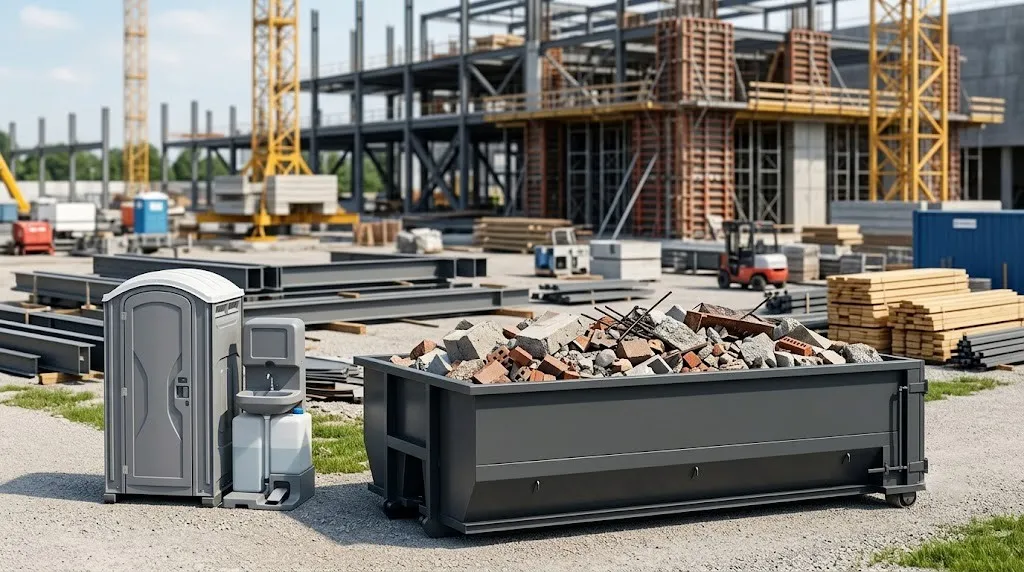
A 30 yard dumpster generally carries 4 to 6 tons, which covers most construction cleanouts, roof tear-offs, and larger remodel debris. That's a wide enough range that the actual material matters more than the box size, much like sizing a storage container rental for a job site depends more on what's going inside than the footprint alone. Shingles, brick and concrete debris fill a 30 yard container's weight capacity long before the box looks full, so contractors doing tear-offs often step down to a 30 yard dumpster rental specifically because a bigger box just means paying to haul more air. Straight household junk, furniture, and general renovation waste run lighter, and crews sometimes push closer to the true volume limit before tonnage becomes the issue, the same way a construction site services plan has to account for multiple equipment deliveries hitting the same access point. Des Plaines job sites with tight alley access should also check clearance, since a roll-off delivery needs about 60 feet of straight clearance behind the truck to drop or pull a container safely. If your project also involves general construction debris tracking under OSHA 1926.25 housekeeping rules, our construction dumpster rental page walks through what typically goes in the box versus what needs separate handling.
A 40 yard roll-off usually runs a similar weight ceiling to the 30, in the 4 to 6 ton range, because weight limits track axle and hauling capacity more than box volume once you're at the larger sizes. This surprises people who assume the biggest dumpster automatically means the biggest weight allowance, the same misconception some crews have about a mobile office trailer rental needing extra clearance just because it's larger. It doesn't always work that way. Volume and tonnage are two different constraints, and a 40 yard box is built for bulky, lightweight material like framing lumber, furniture, or insulation rather than dense debris. Full commercial demolition, large office cleanouts, or multi-room renovations are the typical fit for a 40 yard dumpster rental. Before ordering, confirm what materials are barred outright. Certain items never belong in a roll-off regardless of tonnage, and our what cannot go in a dumpster guide covers that list. Overloading a box, whether by weight or by stacking material above the rim, also creates a road hazard during transport, which is part of why haulers enforce the fill line as strictly as the tonnage, right alongside how they'd enforce clearance rules for a light tower rental staged near the same load-out area.
Going over the rated tonnage means an overage charge added to your final invoice, calculated on the difference between your contract weight and the scale ticket at the landfill. It's not a guess. Every loaded roll-off gets weighed, and the ticket is the record both sides use, much like a septic pumping service invoice is backed by a measured tank volume rather than a guess. This is why knowing your material type before you order matters more than knowing the box dimensions. Full details on pricing structure, including how overage fees interact with base pricing, live on our dumpster rental cost page. Weight limit questions come up constantly with concrete, dirt, and roofing jobs specifically, since those materials are dense enough to hit tonnage caps in a partially filled container, the way a handwashing station rental question comes up constantly on the same renovation jobs. If your project is going to run near the limit no matter what, it's worth discussing swapping to a bigger box or splitting the load across two smaller ones rather than eating an overage charge. Permit questions often surface at the same time as weight questions on Des Plaines job sites, so it's worth reviewing dumpster permit requirements before delivery day, particularly for placement anywhere near a public street or right of way in Des Plaines.
| Dumpster Size | Typical Weight Range | Best For |
|---|---|---|
| 10-20 yard | 2 to 4 tons | Household cleanouts, small remodels |
| 30 yard | 4 to 6 tons | Roofing, siding, mid-size demolition |
| 40 yard | 4 to 6 tons | Bulky low-density debris, large cleanouts |
The empty weight varies by manufacturer, but it's substantial enough that haulers always tare the container before loading. That tare weight is subtracted from the final scale reading to calculate your actual debris tonnage. Ask your provider for the specific tare weight on the unit they're delivering to your Des Plaines site, and if you're also renting a standard porta potty rental for the crew, ask about combined delivery timing too.
Match the material, not just the mess. Dense debris like concrete or shingles needs a bigger weight allowance even in a smaller box. Our how many porta potties do i need guide covers restroom sizing, but for dumpsters, call ahead and describe the material so pricing matches reality.
Not by contract type, no. The limit is set by box size and hauler policy, not by what category of job you're running. A household cleanout with old bricks or tile can hit the same tonnage cap as a construction tear-off. Describe your debris honestly when booking, the same way you'd describe crew size honestly when requesting an emergency porta potty rental on short notice.
Yes, and it's common. Just know the heavy material drives your tonnage even if the box still has visible room. Layer dense debris like concrete near the bottom and lighter material on top so you can gauge fill level accurately against the weight estimate.
Yes. Nearby coverage includes Mount Prospect, about 3.4 miles northwest, and Park Ridge, roughly 4.6 miles southeast. Full coverage details sit on our service areas page, alongside city-specific listings like porta potty rental in Park Ridge, IL.
Yes. Des Plaines Porta Pros delivers dumpster weight limits across Des Plaines and the surrounding metro, with same-day and next-day drop-off available on most orders.
Pricing depends on the unit and how long you need it. See our cost breakdown and request a free quote for an exact figure.
Standard rentals include scheduled service — a pump-out, a clean, a restock and fresh deodorizer. Busy or hot-weather sites can be serviced more often.
Call now or request a free quote — clean units, on-time delivery, transparent pricing.