Farm and agricultural restrooms in Des Plaines run on the same federal rule that covers any hand-labor crew: one toilet facility within a quarter mile walk for every 20 workers, per OSHA 1928.110. Des Plaines Porta Pros sets up standard units on working land, orchards and seasonal operations, with weekly service built around the crew count on site.
The number comes down to headcount and distance, not acreage. OSHA 1928.110 sets the field sanitation baseline for hand-labor agricultural work: potable water, toilets and handwashing, with a facility reachable within a quarter mile of where people are working. That is different from the construction standard, OSHA 1926.51(c), which scales by worker count in bands of 20, 40 and 200. A crew of 15 pickers spread across a large field in Des Plaines might need two units placed at opposite ends, not one unit at the barn. Check the how many porta potties do I need guide for a fuller breakdown, or lean on the OSHA portable toilet requirements page if you are trying to match a specific crew size to a unit count. A standard porta potty rental carries a 60 to 70 gallon holding tank, which handles a crew rotating through a 40 hour week under the ANSI/PSAI Z4.3 service interval of one visit per week for up to 10 users. Bigger crews or longer days mean more frequent pumping, not just more units. If your operation runs seasonal help who move between fields, ask about staged placement so nobody walks farther than they should.
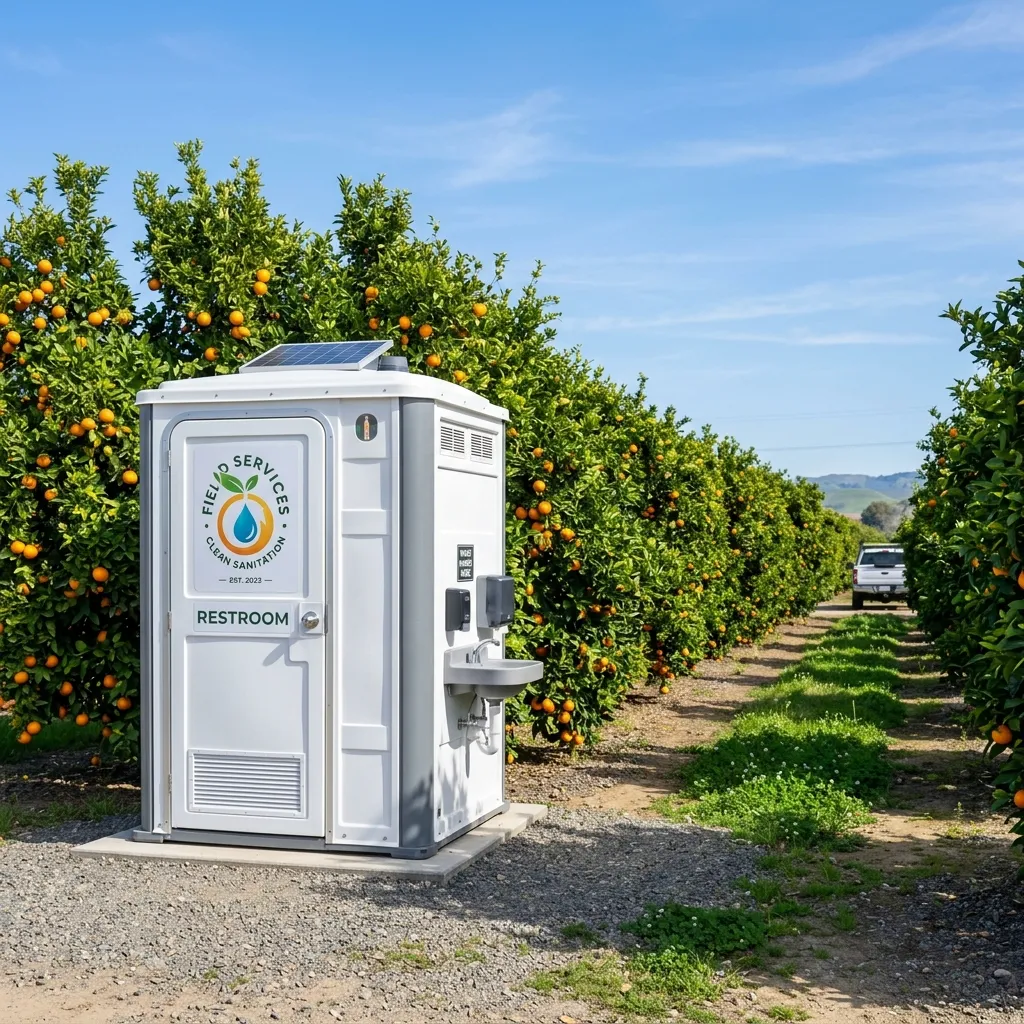
Most farm accounts in Des Plaines start with a handful of standard porta potty rental units near the barn or staging area, then add units at field edges as planting or harvest spreads the crew out. A standard unit measures about 44 by 48 inches on the ground and stands roughly 92 inches tall, small enough to fit on a gravel pad or a mowed corner without needing a poured surface. For crews doing repair work with paints, coatings, herbicides or insecticides, OSHA 1926.51(f)(1) requires washing facilities on top of toilets, which is where a handwashing station rental or a portable sink rental earns its keep. General sanitation still needs potable water under OSHA 1926.51(a)(1), and any handwashing setup needs soap and towels or a dryer under 29 CFR 1910.141(d)(2), since sanitizer alone does not satisfy that rule. Farms running a bunkhouse or a labor camp sometimes add a holding tank rental for wastewater between septic pump-outs. If the farm has an existing septic system feeding a house or an office, a residential tank is typically pumped every 3 to 5 years depending on tank size and household load, and septic tank cleaning can be scheduled around your harvest calendar rather than in the middle of it.
Placement matters more on farmland than almost anywhere else, because the walk distance is the whole point of the OSHA 1928.110 rule. A unit tucked behind the equipment shed does nothing for a crew working the back forty. The porta potty placement guide covers ground stability and truck access, both real issues on farm soil that turns soft after rain. Service trucks need a clear path in and a place to turn around, and delivery gets harder once crops are tall or fields are muddy, so plan placement before planting rather than during it. Farms near Des Plaines that also run roadside stands or agritourism events, corn mazes, pumpkin patches, that kind of thing, should look at festival restroom rental or county fair restrooms for guest-facing setups separate from crew units, since visitor traffic and worker traffic call for different placement and different service frequency. Operations near Mount Prospect, about 3.4 miles northwest of Des Plaines, or Elk Grove Village, 6.6 miles southwest, use the same placement logic even though the drive changes. For winter operations, porta potty in winter covers freeze protection, which matters for any unit left out past first frost.
Weekly is the standard interval for a crew of 10 or fewer working a 40 hour week, per ANSI/PSAI Z4.3. Larger crews or extended harvest hours need more frequent pumping. See how often are porta potties cleaned for how that schedule adjusts to actual use.
Yes. OSHA 1928.110 covers hand-labor agricultural employees specifically, including seasonal and migrant crews, and requires toilets, potable water and handwashing within a quarter mile walk of the work area.
Standard units run in the same range as any standard porta potty rental, with weekly pricing built for multi-month agricultural seasons. Check monthly porta potty rental if the season runs long.
Yes, a single standard unit works for a small crew under 20 people within the quarter mile walk limit. See porta potty rental cost for single-unit pricing.
If your crew applies pesticides, herbicides or coatings, OSHA 1926.51(f)(1) requires washing facilities beyond the toilet itself. A handwashing station rental covers that requirement directly.
Yes. Des Plaines Porta Pros delivers farm and agricultural restrooms across Des Plaines and the surrounding metro, with same-day and next-day drop-off available on most orders.
Pricing depends on the unit and how long you need it. See our cost breakdown and request a free quote for an exact figure.
Standard rentals include scheduled service — a pump-out, a clean, a restock and fresh deodorizer. Busy or hot-weather sites can be serviced more often.
Call now or request a free quote — clean units, on-time delivery, transparent pricing.